
Effective Heat Stress Management Strategies for Poultry in Hot Climates

Heat stress poses a serious challenge for poultry farmers in hot climates. When temperatures rise, birds struggle to maintain their body temperature, which can lead to reduced growth, lower egg production, and even increased mortality. Managing heat stress effectively is essential to protect poultry health and maintain farm productivity. This post explores practical solutions to help poultry operations thrive despite high temperatures.

Understanding Heat Stress in Poultry
Poultry are sensitive to heat because they lack sweat glands and rely on panting to cool down. When the ambient temperature exceeds their comfort zone, birds experience heat stress. This condition affects their metabolism, immune response, and behavior. Common signs include:
Panting and open-mouth breathing
Reduced feed intake
Lethargy and decreased activity
Lower egg production in layers
Increased mortality in severe cases
Heat stress can also increase susceptibility to diseases, as the immune system weakens under prolonged heat exposure. Recognizing these signs early helps farmers take timely action.
Key Factors Contributing to Heat Stress
Several factors influence how poultry respond to heat:
Ambient temperature and humidity: High humidity worsens heat stress by reducing evaporative cooling efficiency.
Stocking density: Crowded conditions limit airflow and increase heat buildup.
Ventilation quality: Poor airflow traps heat and moisture inside poultry houses.
Bird age and breed: Younger birds and certain breeds tolerate heat better than others.
Nutrition and water availability: Dehydration and poor diet worsen heat effects.
Understanding these factors allows farmers to tailor heat stress management strategies to their specific conditions.
Practical Solutions to Manage Heat Stress
Improve Ventilation and Airflow
Good ventilation is critical to remove hot air and bring in cooler air. Options include:
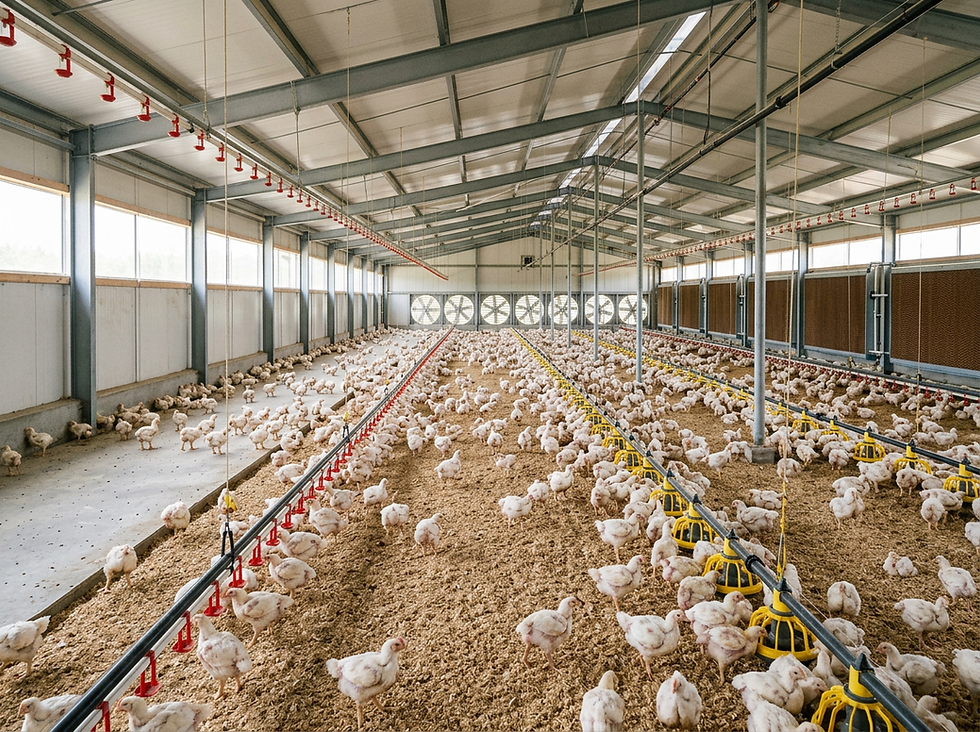
Installing exhaust fans to pull hot air out
Using ridge vents or sidewall curtains for natural airflow
Positioning fans to create cross-ventilation
Avoiding overcrowding to allow air circulation
Regular maintenance of ventilation equipment ensures consistent performance during hot periods.
Use Cooling Systems
Cooling systems help lower the temperature inside poultry houses:
Misting or fogging systems spray fine water droplets that evaporate, cooling the air
Evaporative cooling pads use water-soaked pads with fans to reduce incoming air temperature
Sprinklers can cool birds directly but should be used carefully to avoid wet litter
These systems can reduce house temperatures by several degrees, easing heat stress on birds.
Provide Adequate Water Supply
Water is vital for poultry to regulate body temperature. Farmers should:
Ensure constant access to clean, cool water
Increase the number of drinkers during hot weather
Check water quality regularly to prevent contamination
Use water additives like electrolytes to support hydration
Birds may drink up to twice their normal amount during heat, so water systems must meet this demand.
Adjust Feeding Practices
Heat stress reduces feed intake, so feeding strategies should adapt:
Offer feed during cooler parts of the day, such as early morning or late evening
Use high-quality, easily digestible feed to reduce metabolic heat production
Increase energy density by adding fats or oils
Provide feed in smaller, more frequent meals
These adjustments help maintain nutrition without adding extra heat load.
Manage Stocking Density and Housing Design
Reducing bird density lowers heat buildup and improves airflow. Consider:
Spacing birds to prevent crowding
Designing poultry houses with high ceilings and wide openings
Using reflective roofing materials to reduce heat absorption
Planting shade trees around poultry houses for natural cooling
Thoughtful housing design can significantly reduce heat stress risks.
Monitor and Respond to Heat Stress
Regular monitoring helps detect heat stress early:
Use temperature and humidity sensors inside poultry houses
Observe bird behavior for signs of distress
Record feed and water consumption trends
Implement emergency cooling measures during heat waves
Prompt response minimizes losses and keeps birds healthier.
Case Study: Heat Stress Management in a Tropical Poultry Farm
A poultry farm in a tropical region faced high mortality during summer months. The farm introduced several changes:
Installed exhaust fans and evaporative cooling pads
Increased drinker numbers and added electrolyte supplements
Shifted feeding times to early morning and late evening
Reduced stocking density by 15%
Within two months, mortality dropped by 40%, and egg production improved by 10%. This example shows how combining multiple strategies yields strong results.


Comments